Higher education runs on data, but when that data is trapped in disconnected systems, inefficiencies pile up. Student Information Systems (SIS) are the backbone of campus operations, but to truly maximize their value, they need to work seamlessly with other campus technologies. Whether it's Learning Management Systems (LMS), financial tools, or CRM platforms, integration isn’t just nice to have—it’s a game-changer.
This post breaks down why SIS integration matters, how to get it right, and how Student First makes the process seamless.
Why Integration Matters
Most institutions juggle multiple systems—each managing different aspects of student life, from admissions to grades to tuition payments. When these systems don’t talk to each other, it leads to:
Data Inconsistencies: Information silos create errors, outdated records, and duplicate data.
Frustrated Students & Staff: Manually entering the same data across multiple platforms wastes time and creates bottlenecks.
Limited Decision-Making Power: Disconnected data means incomplete insights, making it harder to support students effectively.
With a fully integrated SIS, all your essential systems work together, ensuring data flows effortlessly across platforms.
Key Benefits of Seamless SIS Integration
Accurate, Real-Time Data – Updates in one system reflect everywhere, eliminating discrepancies.
Improved Student Experience – A single, connected platform gives students and faculty easy access to the tools they need.
Better Decision-Making – Institutions get a 360-degree view of operations, student success trends, and financial health.
Simply put, integration turns your SIS from a static database into a dynamic hub that powers the entire institution.
How to Get Integration Right
Making your SIS work in harmony with other campus technologies requires a strategic approach:
Assess Your Tech Landscape: What’s working? What’s not? Identify gaps and pain points before diving into an integration project.
Set Clear Goals: Do you want to automate workflows? Improve reporting? Reduce IT maintenance? Defining priorities ensures a focused approach.
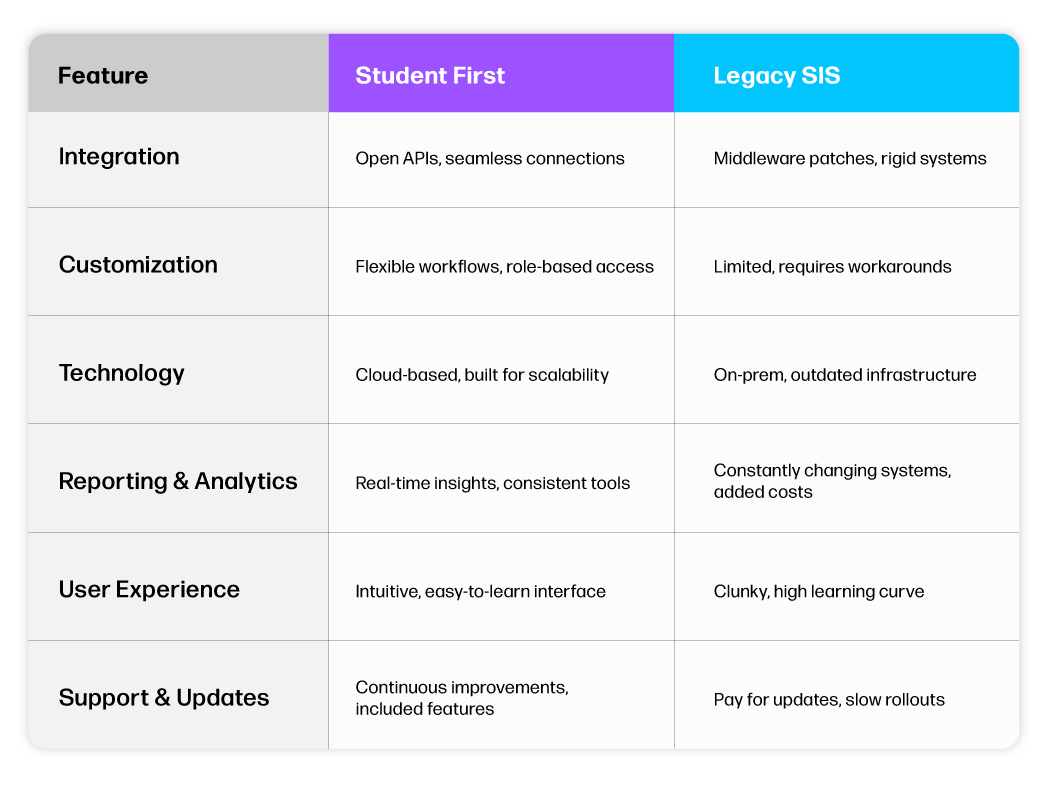
Choose the Right Integration Tools: This is where Student First’s open APIs and microservice architecture make all the difference. Unlike legacy systems that rely on outdated middleware, Student First is built for modern connectivity.
Involve Key Stakeholders: IT teams, faculty, and administrators should collaborate from the start to ensure a smooth transition.
Implement in Phases: Rolling out integrations step by step prevents disruptions and allows for adjustments along the way.
Train & Support Staff: Technology is only as effective as the people using it. Equip your team with the knowledge they need to maximize new integrations.
Overcoming Common Integration Challenges
Even the best-laid plans can hit roadblocks. Here’s how to tackle some of the most common issues:
Resistance to Change: Faculty and staff can be hesitant about new systems. Early involvement and clear communication make transitions smoother.
Legacy Software Compatibility: Many older SIS platforms struggle with integration. Instead of patching together outdated systems, Student First offers modern, API-first architecture that makes integration effortless.
Constantly Changing Reporting Systems: Unlike vendors who constantly shift their reporting tools, Student First provides consistent and flexible analytics, so you don’t have to relearn systems every few years.
High Costs & Hidden Fees: Some vendors nickel-and-dime institutions for integrations. Student First provides transparent pricing and all-inclusive features without surprise fees
What’s Next? The Future of SIS Integration
Higher ed technology is evolving fast, and institutions need solutions that keep up. Here’s where the industry is headed:
AI & Machine Learning: Personalized student success strategies based on real-time insights.
Blockchain Credentials: Secure, tamper-proof student records and digital transcripts.
Cloud-Based Platforms: Flexible, scalable solutions that reduce IT burden and increase accessibility.
With Student First’s cloud-native architecture, institutions don’t just adapt to change—they stay ahead of it.
Student First vs. Legacy SIS: A Side-by-Side Look
The Bottom Line
If your current SIS is making integration a headache, it might be time for a change. Student First eliminates the complexity, reduces costs, and connects your entire campus effortlessly.
A more connected campus starts with a modern SIS.
Connect with Student First to learn how our platform helps institutions simplify operations, strengthen decision-making, and improve the student experience.